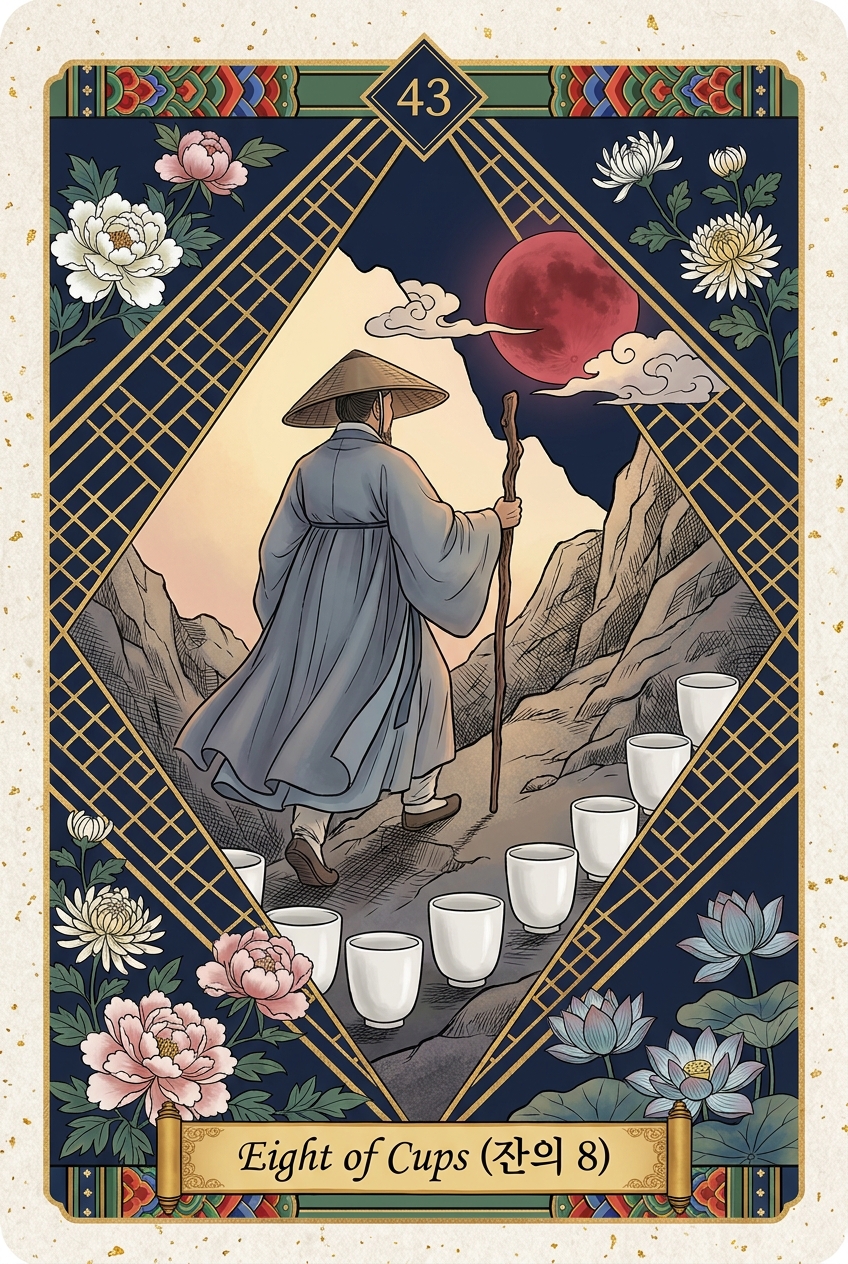
Eight of Cups
settled feelings; the next stage; leaving the past behind
What the card means
Eight cups stand upright in an incomplete row — the work of building something, left behind. The traveller in a Joseon cloak does not look back at what was constructed. Instead he climbs a steep rocky path toward a distant red moon, walking staff in hand, moving from what was comfortable into what calls to him. The card describes the moment when settled satisfaction stops being enough, when the shape you built no longer fits what you have become.
This is not flight from disaster. The cups are whole and arranged. What is being abandoned is functioning — but functionality and meaning are not the same thing. The Eight of Cups marks the threshold where someone stops defending yesterday's choices and admits the next stage is elsewhere. The muted blues and greys of the mountain path suggest this is not a happy decision, only an honest one.
Symbols in the art
- Eight white porcelain cups in an incomplete row
- Eight suggests abundance, rhythm, near-completion — but the row is unfinished. What was built works, but it does not feel whole. The white porcelain is Joseon craft, dignified and durable. The traveller is not rejecting quality; he is outgrowing containment.
- The cloaked traveller with walking staff
- He carries only what moves with him. His posture is already committed to the climb — weight forward, not lingering. The cloak and staff mark him as someone accustomed to journeys, someone for whom leaving is a known language.
- The steep rocky mountain path
- Steep means deliberate effort ahead. Rocky means unsmoothed terrain, no established route. The path itself is not inviting — this is not an escape into ease, but a conscious choice to trade comfort for something harder and less certain.
- The distant red moon
- Red carries urgency and depth in Korean visual language. Distant means it cannot yet be reached, only recognized as real. The moon pulls the traveller forward into darkness that is not yet familiar.
Upright
You have outgrown something that still functions. The next stage is not here; it is ahead, and the path up to it is steep. Leave what you built with respect — it served its purpose — but do not mistake loyalty to the past for loyalty to yourself. The card reads as permission to stop defending a choice simply because you made it.
Reversed
The cups are being abandoned out of restlessness rather than readiness, or the traveller has climbed halfway and turned back because the path was harder than the view suggested. Ask whether you are moving toward something or only running from something. Real leaving requires clarity about direction, not just exhaustion with where you are.
- In love
- A relationship that was stable has stopped being enough — yours or theirs.
- In work
- You have mastered this role and the mastery feels like confinement. The next opportunity is elsewhere and smaller on the surface than what you are leaving.
Through a saju lens
水 — water flows, but it also pools. The Eight of Cups names the moment when a 수 (water) Day Master realizes the pool has become stagnant. For water types, this card often reads as necessity rather than choice — the system that was working has calcified, and movement is the only path forward. For 금 (metal) Day Masters, the card warns against confusing stability with success; metal prizes order and completion, so leaving what is functionally complete can feel like failure rather than evolution. For 목 (wood) types, the climb is natural — growth always moves toward new territory. 火 (fire) Day Masters may find the solitary mountain path unsatisfying; fire needs audience and warmth, but this journey offers only discipline and distance.
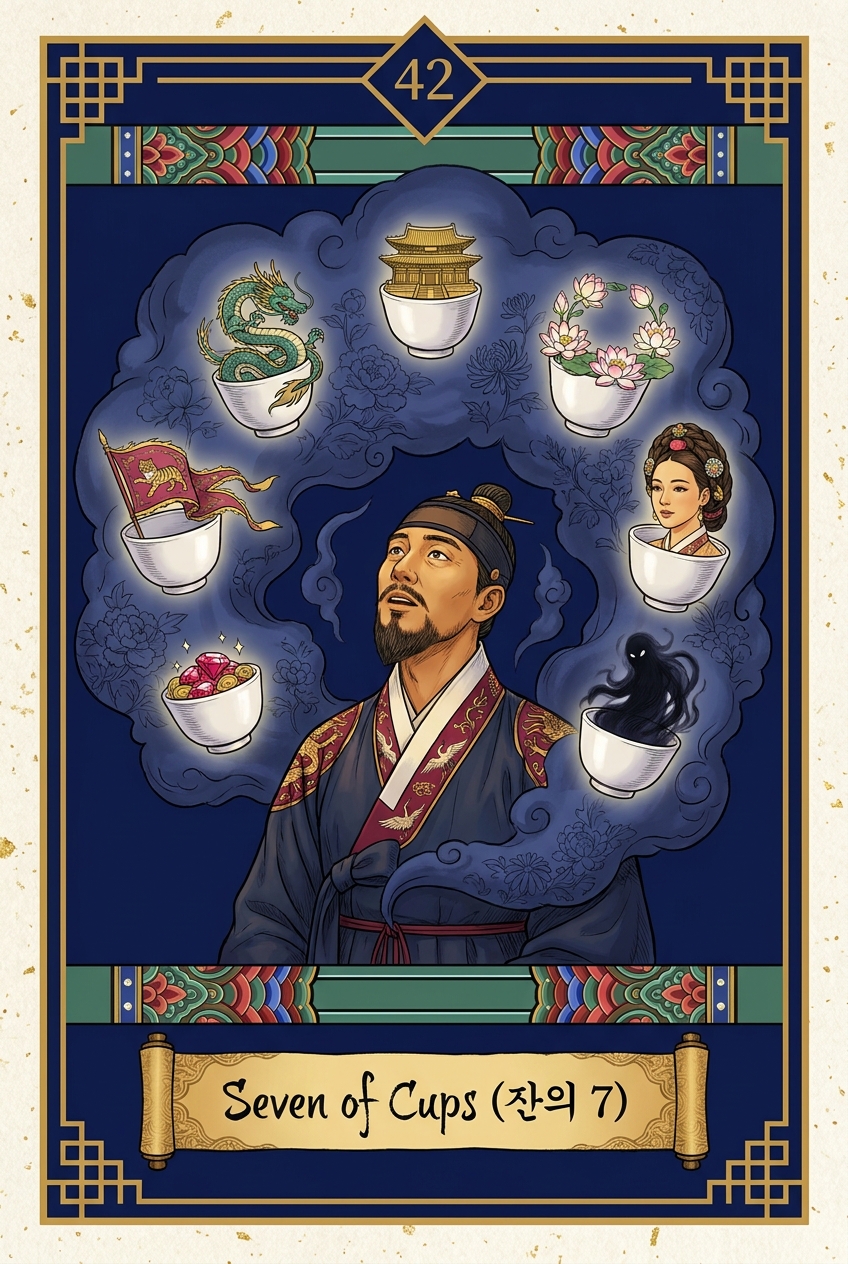 Seven of Cups
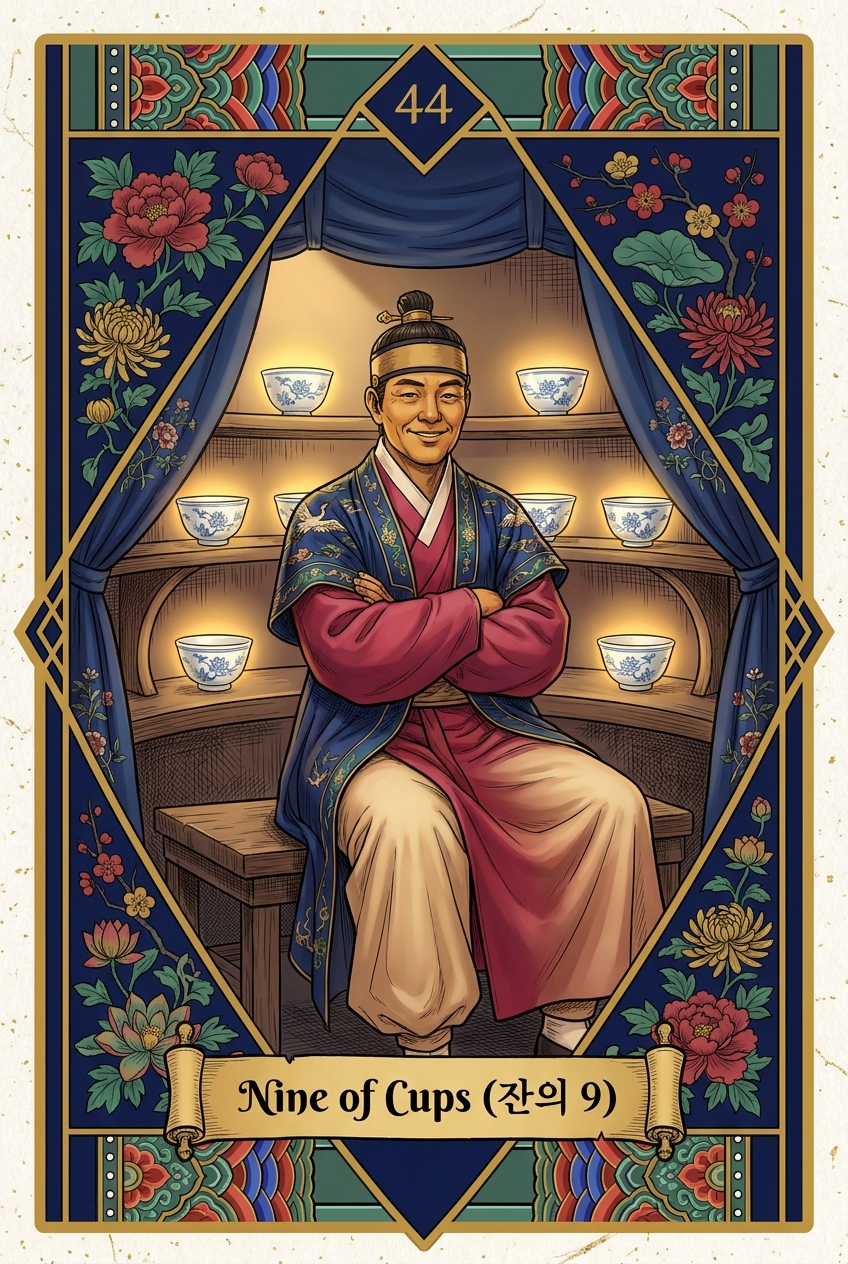 Nine of Cups
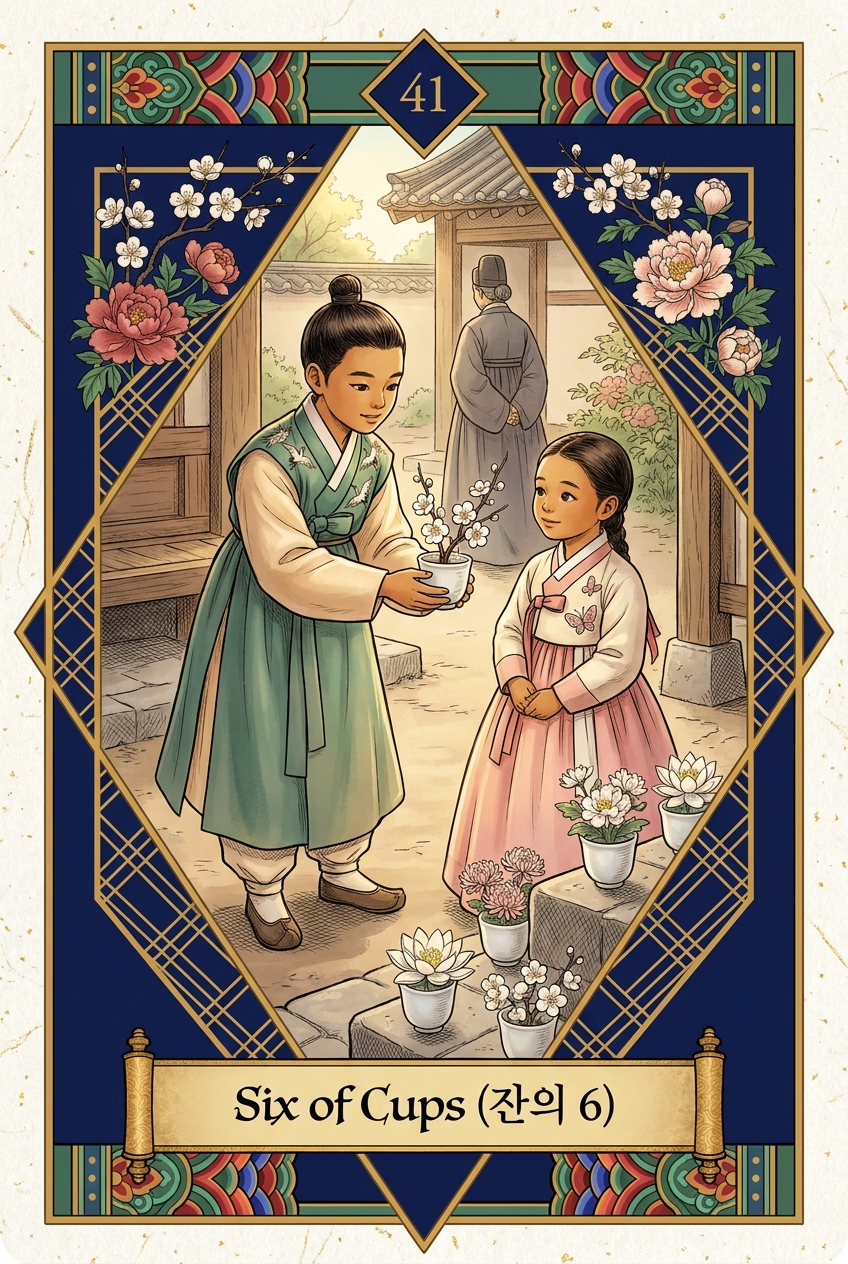 Six of Cups
 Ten of Cups